
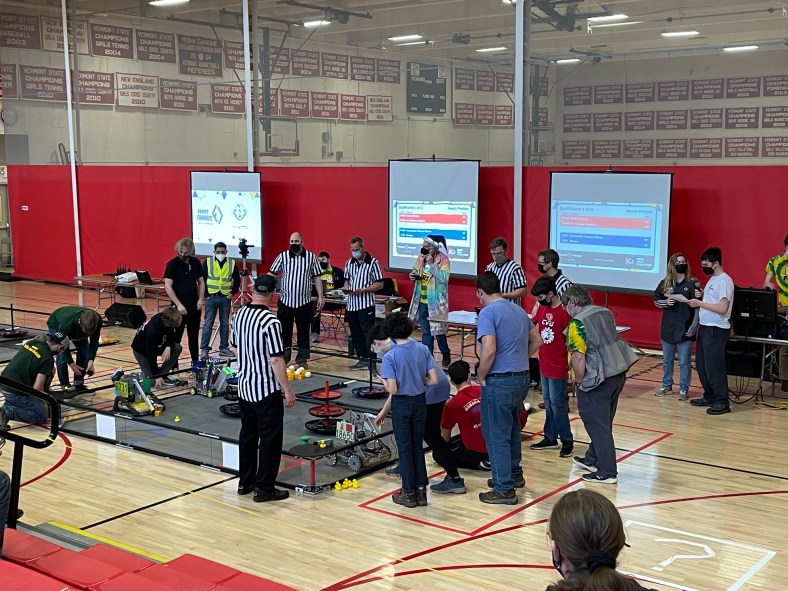

On Saturday, March 19, 2022, we took our robot, Freya, to the Vermont State FIRST Tech Challenge Championship competition hosted by the CVU RoboHawks in Hinesburg, VT. The competition involves several rounds of Qualification Matches, followed by the Semi-Final Matches, followed by the Final Match based on the rankings earned during the previous matches.
The team started out the day with an interview with two judges. We presented the season’s work, represented in our Engineering Portfolio and our larger Engineering Notebook. These had been polished up over the course of the previous week.
Freya was called up for the first match of the day, bright and early, partnered with the Ringers on the Blue Alliance. After a serious fumble in the Autonomous period, she was able to recover well enough to deliver ducks in the Endgame and score points for the Alliance. However, her delivery system was broken beyond on-site repair, and the remainder of the matches were played without it.
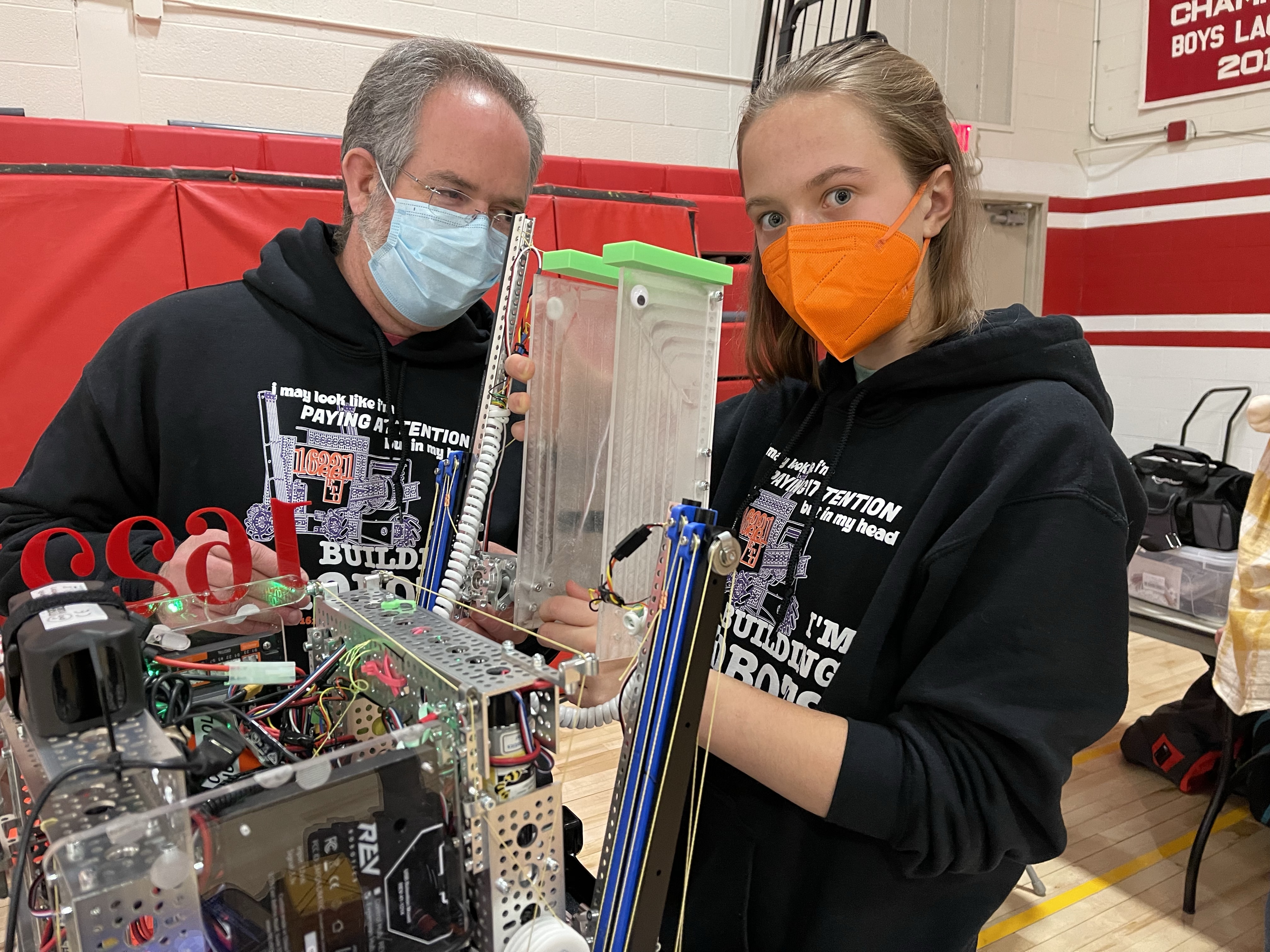


Our next Alliance was with the Cookie Clickers, our friends from the Bennington Area Makers. Both robots gave a creditable performance. We went on to play in a total of 6 matches, with each match improving as the drivers became adept at running Freya without her delivery slides and chute. They were able to use her intake to push freight all the way through, delivering to the bottom level of each hub.
The team was interviewed in the pit by the judges, who stopped by with each team to discuss their robots and their approach to the problems posed by the game challenges.
While Freya did not advance past the qualifying matches, she impressed the judges with her design and her modularity. She was able to compete without all her assemblies, and she was able to swap out her alliance markers between red and blue with a little Velcro™. The judges were also impressed by the team’s resilience and their engineering process through the season.
Congratulations to our Team on a Season and Game that was well thought, well designed, and well-played!
Judged Awards
The team came home with three awards – Second Place for the Think Award, Second Place for the Control Award, and First Place for the Design Award.
The Think Award: Removing engineering obstacles through creative thinking.
This judged award is given to the Team that best reflects the journey the team took as they experienced the engineering design process during the build season. The engineering content within the portfolio is the key reference for judges to help identify the most deserving Team. The Team’s engineering content must focus on the design and build stage of the Team’s Robot.
The Team must be able to share or provide additional detailed information that is helpful for the judges. This would include descriptions of the underlying science and mathematics of the Robot design and game strategies, the designs, redesigns, successes, and opportunities for improvement. A Team is not a candidate for this award if their portfolio does not include engineering content.
The Manchester Machine Makers earned Second Place at the Vermont Championships for the Think Award. The team created an Engineering Notebook with detailed and elaborate descriptions of all the systems of the robot, including the design and engineering process of both hardware and software, and the support systems provided by fundraising and community partnerships. This is the third year running in which the Team has been recognized in the Think Award category.
Control Award sponsored by Arm, Inc.: Mastering robot intelligence.
The Control Award celebrates a Team that uses sensors and software to increase the Robot’s functionality in the field. This award is given to the Team that demonstrates innovative thinking to solve game challenges such as autonomous operation, improving mechanical systems with intelligent control, or using sensors to achieve better results. The control component should work consistently in the field. The Team’s engineering portfolio must contain a summary of the software, sensors, and mechanical control, but would not include copies of the code itself.
The Manchester Machine Makers earned Second Place at the Vermont Championships for the Control Award. The team was able to show its consideration for improving the driver controls, and effective use of sensors and algorithms in its software.
Design Award: Industrial design at its best.
This judged award recognizes design elements of the Robot that are both functional and aesthetic. The Design Award is presented to Teams that incorporate industrial design elements into their solution. These design elements could simplify the Robot’s appearance by giving it a clean look, be decorative in nature, or otherwise express the creativity of the Team. The Robot should be durable, efficiently designed, and effectively address the game challenge.
The Manchester Machine Makers earned First Place at the Vermont Championships for the Design Award! The team put a lot of thought into the design of Freya, considering all aspects of how she would need to be both used and maintained. The judges appreciated the swappable Alliance markers as well as how well the robot performed on the field after having removed one component. The modularity of the design and flexibility of the robot’s performance were a key factor in the team’s success.
Dean’s List
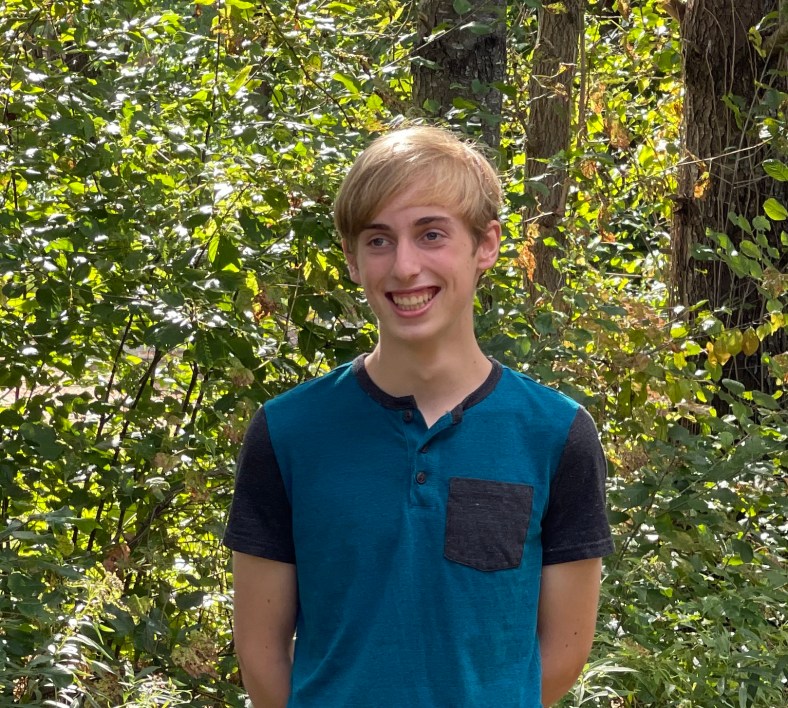
Our very own Isaac Vernon was recognized as a Finalist for the Dean’s List Award as well.
Congratulations!


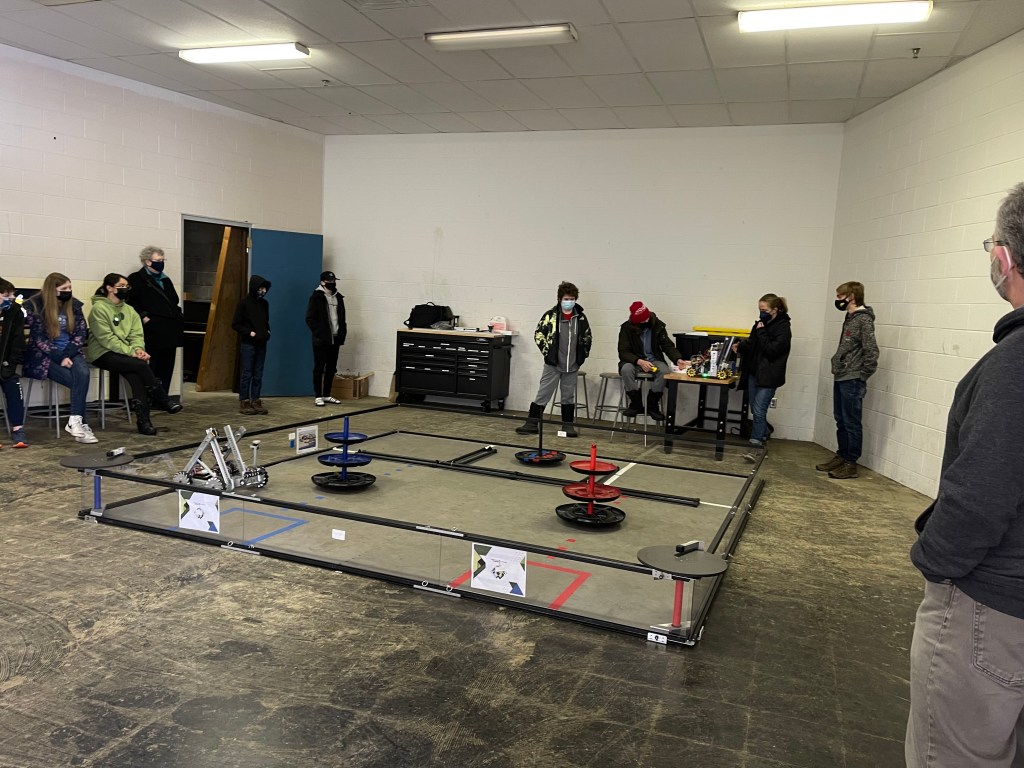















 FTC 16221 Manchester Machine Makers